
How to prepare for the 'Apolipoprotein B' test: rules for taking it
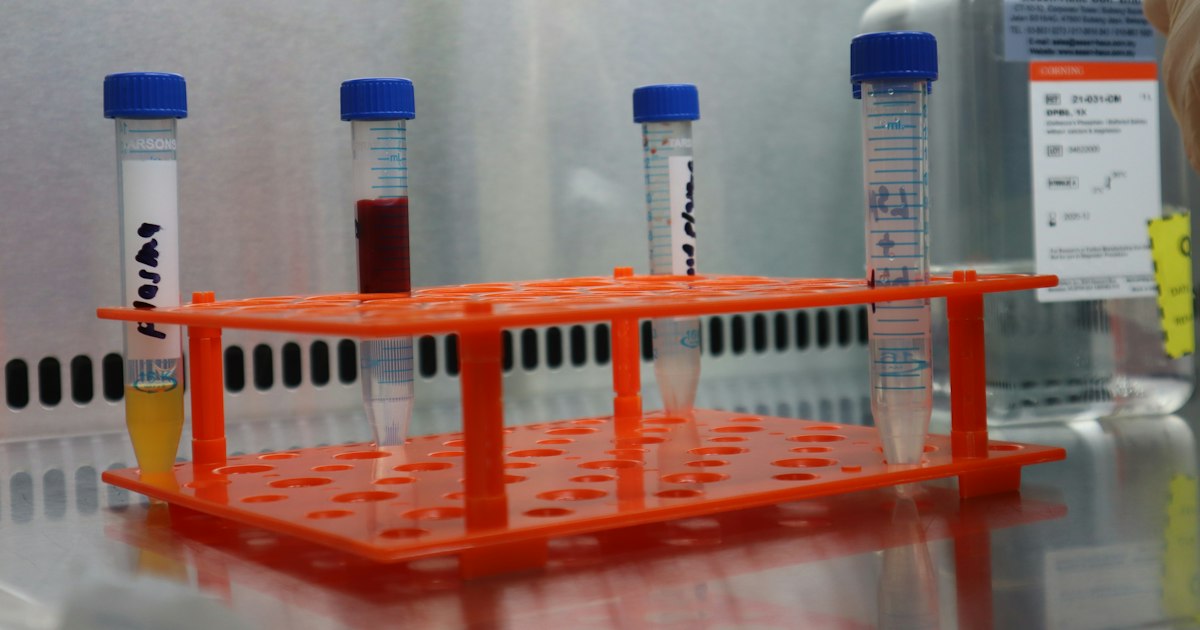
Apolipoprotein B (apoB) is a protein that is part of every atherogenic lipoprotein particle. Therefore its concentration in the blood effectively shows how many such particles circulate in the vessels. European guidelines increasingly call apoB a more precise marker of risk than the familiar LDL cholesterol. The editorial team breaks down how to prepare for the test and how it differs from a classic lipid profile.
What apoB shows
Apolipoprotein B-100 is a large structural protein that the liver embeds into very-low-density lipoproteins. During metabolism these particles are converted into intermediate- and low-density lipoproteins, and apoB remains in their shell. The intestinal form, apoB-48, is part of chylomicrons.
The key feature: one atherogenic particle contains exactly one apoB molecule. Thus the test does not assess how much cholesterol is «loaded» into the particles but counts the particles themselves. It is the particles that penetrate the artery wall and become trapped there that trigger the development of atherosclerosis.
Why does this matter in practice? LDL cholesterol and the number of particles usually change in parallel, but not always. In insulin resistance, high triglycerides, obesity and diabetes, LDL particles become smaller and poorer in cholesterol. Then LDL may be «normal», while the number of particles and the risk are elevated. Such a discrepancy is called discordance.
The 2018 consensus of the European Atherosclerosis Society and EFLM and the 2019 ESC/EAS guidelines consider apoB a preferred additional indicator, especially for people with high triglycerides, diabetes, obesity and very low LDL on therapy.
Whether fasting is required
One of the advantages of apoB is its stability with respect to food intake. After an ordinary meal, the number of apoB-containing particles changes little: chylomicrons entering from the intestine are numerous by lipid mass, but their contribution to the total amount of apoB is small. The 2016 consensus on non-fasting lipid testing classifies apoB among the indicators that can be measured without fasting.
However, «can be done without fasting» does not mean «can be done any way at all». If apoB is determined together with a full lipid profile, where triglycerides are sensitive to food, the logic of preparation is set by the most sensitive indicator. In that case it is better to take the blood in the morning after 10–12 hours without food.
If apoB is taken separately, it is enough to avoid very fatty food a few hours before the draw. Excessive lipemia — cloudy serum with a large number of fat particles — can interfere with the immunoturbidimetric method usually used to measure apoB.
For tracking trends, the editorial team advises choosing one standard and adhering to it each time: the same time of day, the same interval after eating, the same laboratory. Then changes of 5–10% can be more confidently linked to real processes rather than to the conditions of the draw.

What can affect the result
Although apoB is more stable than triglycerides, it is affected by the same basic factors as the lipid profile overall. The most important of these are acute conditions, medications and hormones, as well as the technical conditions of the draw.
- Acute illness.Infections, injuries and surgery temporarily lower the level of atherogenic lipoproteins; an elective test is better postponed until recovery.
- Lipid-lowering therapy.Statins, ezetimibe and PCSK9 inhibitors lower apoB; note them on the referral, but do not discontinue them on your own.
- Hormones.Anabolic steroids, especially oral ones, worsen the lipid profile; hypothyroidism raises the level of atherogenic particles.
- Draw technique.Prolonged tourniquet application and an upright position concentrate the blood and raise the value by a few percent.
The difference between laboratories deserves separate mention. Methods for determining apoB are standardized against an international reference material, so agreement between laboratories is generally better than for calculated LDL. Still, for tracking trends it is advisable to use the services of a single laboratory.
Another nuance is pregnancy, during which lipid and apoB levels physiologically rise. Interpreting such results by the usual targets is incorrect.
Short-term diets, several days of fasting or an abrupt reduction in calories before the test also alter lipid metabolism. The goal is to capture the typical state, so for 1–2 weeks before the test it is better not to make radical changes to your diet.
Who benefits from this test and when
For athletes, apoB is of particular value. With the use of anabolic androgenic steroids, the lipid profile changes sharply: HDL drops, LDL rises. A 2014 Endocrine Society review describes such changes as one of the mechanisms of increased cardiovascular risk in AAS users. ApoB makes it possible to assess the number of atherogenic particles independently of triglycerides.
The test is also useful for people with metabolic syndrome, insulin resistance, type 2 diabetes mellitus, obesity, high triglycerides, as well as those whose LDL is low on treatment but whose further risk needs to be assessed more precisely.
Another group is people with a burdened family history. If there were early heart attacks or strokes in the family, determining apoB together with lipoprotein(a) helps the doctor better assess individual risk.
Finally, apoB is convenient for tracking trends: since it depends less on food, it can be compared even when the conditions of the draw differed somewhat. But the best information is provided by combining apoB with a full lipid profile.
Rules for taking it and interpretation
The practical preparation rules we recommend:
| Situation | Recommendation |
|---|---|
| ApoB separately | Fasting not required; avoid fatty food for 3–4 h |
| ApoB together with a lipid profile | Morning, 10–12 h without food, water permitted |
| Alcohol | Abstain for 24–48 h |
| Training | No intense exertion for 24 h |
| Illness | Postpone until full recovery |
| Medications and hormones | Do not discontinue, note on the referral |
The 2019 ESC/EAS guidelines use apoB as a secondary treatment target. Target values depend on the risk category: below 100 mg/dL at moderate risk, below 80 mg/dL at high risk, and below 65 mg/dL at very high risk. Understanding your own category requires a doctor's assessment.
If apoB is noticeably higher than would be expected from the LDL level, this indicates a large number of small particles. Such a situation is often combined with high triglycerides and insulin resistance and requires attention to diet, body weight and physical activity.
A single test is not a diagnosis. The doctor assesses apoB in combination with blood pressure, smoking, glycemia, family history and other factors, and if necessary orders a repeat test.
Editorial conclusions
ApoB shows the number of atherogenic particles and depends little on food intake, so it can be taken without strict fasting, provided it is not part of a full lipid profile.
The result is distorted most not by breakfast but by acute illnesses, medications, hormonal drugs and abrupt dietary changes before the test.
For athletes, especially those who have encountered hormonal drugs, apoB is one of the most informative ways to assess the real atherogenic load on the vessels.
We also recommend familiarizing yourself with our materials on preparing for the HDL and LDL test, on triglycerides, and on glycated hemoglobin as a marker of long-term glucose control.
References
- Mach F, Baigent C, Catapano AL, et al. 2019 ESC/EAS Guidelines for the management of dyslipidaemias: lipid modification to reduce cardiovascular risk. Eur Heart J. 2020;41(1):111–188.
- Langlois MR, Chapman MJ, Cobbaert C, et al. Quantifying atherogenic lipoproteins: current and future challenges in the era of personalized medicine and very low concentrations of LDL cholesterol. A consensus statement from EAS and EFLM. Clin Chem. 2018;64(7):1006–1033.
- Nordestgaard BG, Langsted A, Mora S, et al. Fasting is not routinely required for determination of a lipid profile. Eur Heart J. 2016;37(25):1944–1958.
- Sniderman AD, Thanassoulis G, Glavinovic T, et al. Apolipoprotein B particles and cardiovascular disease: a narrative review. JAMA Cardiol. 2019;4(12):1287–1295.
- Contois JH, McConnell JP, Sethi AA, et al. Apolipoprotein B and cardiovascular disease risk: position statement from the AACC Lipoproteins and Vascular Diseases Division Working Group on Best Practices. Clin Chem. 2009;55(3):407–419.
- Pope HG Jr, Wood RI, Rogol A, et al. Adverse health consequences of performance-enhancing drugs: an Endocrine Society scientific statement. Endocr Rev. 2014;35(3):341–375.
Andriy Melnyk
A strength-sports coach and author of programs for beginner and intermediate levels. Writes about training planning.